


Pyramid Solitaire Saga
4.576.67K Reviews
App Specs
- Version
- 1.174.0.0
- Updated On
- License
- Free
- Downloads
- 10,000,000+
- Developer
- King
- Categories
- Card
- Platform
- Android
Screenshots

 Analysis by AppCompare
I like card games that give me a small decision to make without demanding a long session, and Pyramid Solitaire Saga is at its best when I treat each level as a compact puzzle. Its central idea is simple: remove cards by pairing values that total 13. That familiar rule becomes a planning exercise when the layout limits which cards are available and how many moves I can afford. For me, that shift—from clearing a hand to thinking several choices ahead—is what gives this particular solitaire its appeal.
A familiar rule with a puzzle’s pressure
In a standard solitaire game, I often settle into a steady rhythm and let card order dictate the next move. Here, the target sum gives each exposed card a purpose: I need to notice which pair is possible now, and whether taking it will uncover a useful card or leave an awkward one behind. The arithmetic is easy to learn, but the order of removal is where the challenge lives. A move can be legal and still be a poor choice if it blocks a better route through the layout.
That makes the game approachable without making every round automatic. I can understand the objective quickly, then gradually become more deliberate about scanning the available cards before tapping. When a level is tight, I try to pause before clearing an obvious pair and consider what its removal will reveal. Looking one step beyond the immediate match is a practical habit here, not a complicated strategy system, and it can make the difference between a thoughtful attempt and a sequence of hopeful taps.
The Gameplay Experience
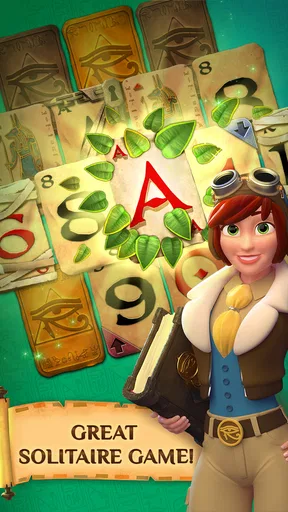
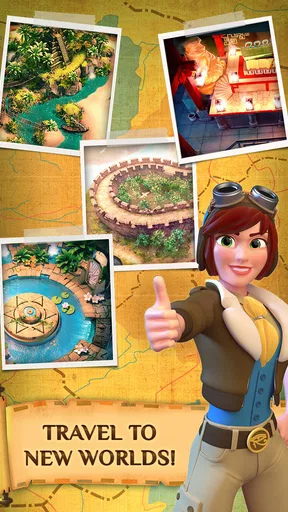
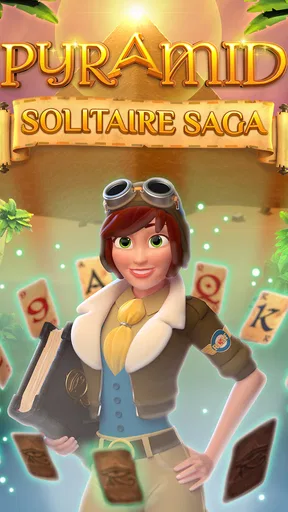
So, what makes Pyramid Solitaire Saga stand out in the world of digital card games? First off, the premise is delightfully simple yet cleverly executed. Your mission is to help Helena, our intrepid explorer, as she travels through magical worlds to uncover the secrets of the ancient pyramids. The twist here is that you're not just playing regular solitaire; you're solving puzzles to progress through an intriguing storyline.
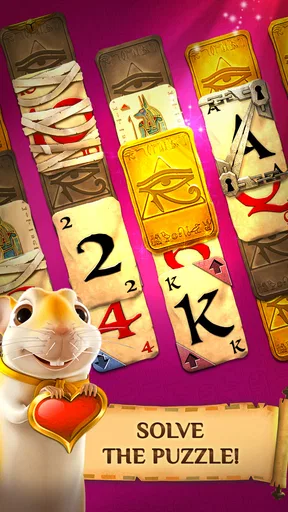
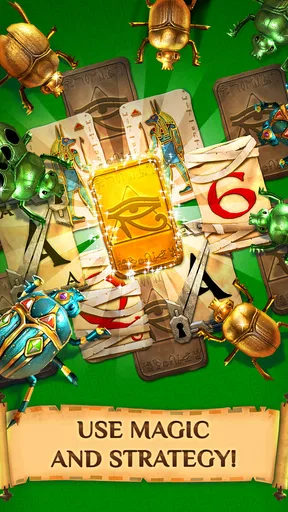
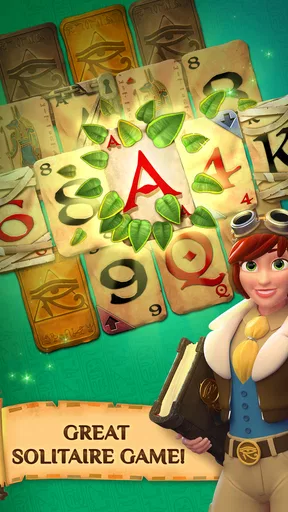
The game mechanics are pretty straightforward. You need to match cards that add up to 13. It's a fun twist on the classic game, and trust me, it gets addictive fast. Each level presents a unique challenge, and as you advance, the difficulty ramps up in a way that's both satisfying and rewarding. Plus, there are boosters and power-ups that add a layer of strategy to your gameplay.
How the levels change the feel of a short session
The level-based structure is useful when I have only a few spare minutes: I can make one attempt, see whether the arrangement suits my approach, and stop without needing to commit to a long card session. A useful routine is to scan the visible cards first, identify the pairs that are immediately available, and then choose the match that seems most likely to open up the next useful choice. I don’t need to calculate every possible sequence; simply avoiding the first tempting move can make the puzzle feel less random.
That structure also means the experience is not identical to playing a shuffled deck of classic solitaire. A traditional version is often better when I want an open-ended, familiar card routine; this game is a better fit when I want individual objectives and a sense of moving through a sequence of puzzles. The adventure framing gives each completed stage a bit more context, though the core enjoyment still depends on whether I like solving the card layout itself.
Worth Reading Before You Choose

Flipboard Shows What News Apps Must Do Beyond the Feed

Switching to Android Auto Means Rethinking Your Driving Routine

Google Calendar Makes a Crowded Week Easier to Manage

Ludo King Makes the Most of the Minutes Between Plans

Baby Panda World Brings Quick Play to Modern Phones, but Its Game Library Feels Busy

ESPN’s Live Game View Makes Following Close Games Easier
Visuals and Sound
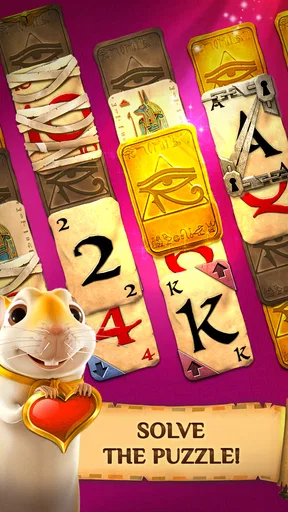
I have to say, the visuals in Pyramid Solitaire Saga are quite stunning. The game sports a rich color palette that perfectly captures the mystical theme. The attention to detail is evident in the beautifully designed cards and backgrounds, making each level feel like a piece of art. It's one of those games where you can tell the developers put a lot of love into the design.
As for the sound, it's equally immersive. The background music is soothing and perfectly complements the gameplay. It's the kind of soundtrack that keeps you calm and focused, which is exactly what you need when you're deep into solving a card puzzle. The sound effects are subtle but add just the right amount of feedback to keep things interesting.
When it fits into an ordinary day
For a realistic use case, I’d reach for it during a quiet wait or a short break after finishing a task: one level gives me a contained goal, and the card matching asks for enough attention to pull me away from idle scrolling. It suits that in-between moment better than a sprawling strategy game, where I might need to remember a complicated plan, or a fast action game, where I need uninterrupted focus and quick reactions.
I would not choose it when I’m trying to read, work through a longer story, or play with someone beside me. The appeal is a personal puzzle loop, not conversation or shared play. If I’m tired enough that even checking the available pairs feels like effort, the same simple rule can become repetitive rather than relaxing. The best session is one where I have a few minutes to focus, but no pressure to turn a small break into a long gaming session.
Progression and Challenges
One of the things I love about Pyramid Solitaire Saga is how it keeps you coming back for more. With over 1,000 levels, there's plenty to keep you occupied. The game is structured in a way that each level feels like a mini-adventure, and completing a world gives you a sense of accomplishment that feels oh-so-good.
Challenges come in the form of tricky card arrangements and limited moves, but that's where the fun lies. You might find yourself stuck on a level, but the satisfaction of finally figuring it out is worth the effort. And if you're competitive like me, you'll enjoy the leaderboard feature where you can see how you stack up against other players.
Useful habits for difficult layouts
When a level does not work out, I find it more useful to change my opening choice than to repeat the same taps and hope for a different result. I look for pairs that uncover cards, and I pay attention to whether removing one card leaves a value that can be matched later. This is a modest adjustment, but it makes retries feel like experiments: I can test a different route and learn whether the layout has opened up more favorably.
Boosters and power-ups can help, but I’d treat them as a response to a genuine bottleneck rather than an automatic part of every attempt. If I’m close to finishing and one extra assist could rescue a good run, using help may feel worthwhile. If I have not yet understood why my choices are leaving dead ends, a booster may only postpone that lesson. Players who prefer every puzzle to be solved with no assistance may find this layer less appealing than the bare card logic.
In-App Purchases and Ads
Now, let's talk about the inevitable – in-app purchases. Pyramid Solitaire Saga is free to play, but like many games, it offers in-app purchases for boosters and extra lives. The good news? You can enjoy the game without spending a dime if you choose. The purchases are there to speed up your progress, but they’re not necessary to enjoy the game.
As for ads, they're present but not intrusive. You'll encounter them between levels, but it’s a small price to pay for a free game. Plus, they offer you the option to watch an ad for extra moves, which can be a lifesaver when you're just one card away from winning a level.
What the free-to-play setup means for my choice
The game costs nothing to start, while optional in-app purchases range from $0.99 to $69.99 per item. I’d decide in advance whether I’m comfortable with occasional paid help, because a level-based puzzle can make an extra move tempting precisely when I’m close to success. My own rule would be to retry after a loss before buying anything: if a different opening gives me a clearer path, I keep playing; if I’m simply frustrated, I take a break rather than pay to push through irritation.
That approach matters most for players who dislike prompts to spend or who want a card game with no purchase decisions at all. The free option makes it easy to try the core mechanic, but it does not turn the purchase layer into a strength for everyone. If you prefer a stripped-down solitaire experience where the only question is how to play the cards, a conventional no-frills alternative may suit you better.
Who will enjoy this particular kind of solitaire
I’d recommend it to people who already enjoy solitaire but want more explicit puzzles, visible progression, and a light adventure wrapper around each run. It can also work for a newcomer who is comfortable learning a simple card rule and wants short, self-contained challenges rather than a complex strategy tutorial. King developed the game, and it remains an established option in the card-game space: it has a 4.5 average rating, drawn from around 1.1 million ratings, and has passed 10 million installs.
The audience rating is Everyone, and the game is free to play. It was released on June 30, 2014, and version 1.168.0.0 requires Android 6.0 or later. Those details make it easier to judge whether it fits your device and preferences, but the deciding question is still the play style: do you enjoy looking for a sequence of useful matches, or would you rather play a more open-ended version of solitaire?
I’d skip it if I wanted a pure, traditional solitaire table, a competitive card game built around direct play against another person, or a game that never interrupts its basic loop with monetization choices. Its puzzle framing and progression are the point, so they are not bonuses for someone who would rather have a plain deck and no extra structure. Likewise, anyone who dislikes retrying levels may find the tougher arrangements more irritating than satisfying.
Final Thoughts
All in all, Pyramid Solitaire Saga is a delightful game that combines the thrill of a good puzzle with the charm of a well-told story. It's perfect for those moments when you want to unwind but still keep your mind sharp. Whether you're a seasoned solitaire player or a newbie, there's something in this game for everyone.
So, if you're ready to dive into a world of ancient mysteries and addictive puzzles, give Pyramid Solitaire Saga a try. It's available for both Android and iOS, and I promise, it's worth the download. Happy card matching!
Pros
- Engaging levels with increasing difficulty.
- Visually appealing graphics and animations.
- Frequent updates with new challenges.
- Easy to learn
- hard to master gameplay.
- Integrated social features for competition.
Cons
- In-app purchases can be expensive.
- Requires a stable internet connection.
- Occasional performance lags on older devices.
- Limited lives can interrupt gameplay.
- Ads can be intrusive at times.
FAQs for Pyramid Solitaire Saga
What is Pyramid Solitaire Saga?
Pyramid Solitaire Saga is a captivating puzzle game developed by King. It combines the classic card game of solitaire with a unique storyline where players explore ancient worlds and uncover hidden treasures. The game features various levels with increasing difficulty, making it both challenging and entertaining.
Is Pyramid Solitaire Saga free to play?
Yes, Pyramid Solitaire Saga is free to download and play. However, it offers in-app purchases for players who wish to enhance their gaming experience. These purchases can help unlock additional features, lives, or boosters, but they are entirely optional and not necessary to progress.
What platforms is Pyramid Solitaire Saga available on?
Pyramid Solitaire Saga is available for both Android and iOS devices. You can download it from the Google Play Store for Android or the Apple App Store for iOS. The game is optimized for both smartphones and tablets, offering a seamless gaming experience across devices.
How does the energy system work in Pyramid Solitaire Saga?
The game uses an energy system where each level attempt costs a life. Players start with a set number of lives, and once depleted, they can either wait for them to replenish over time or purchase additional lives through in-app purchases. This system encourages strategic play and patience.
Can I play Pyramid Solitaire Saga offline?
Pyramid Solitaire Saga requires an internet connection to download updates and access certain features. However, once downloaded, you can play many levels offline. Keep in mind that some features, such as in-app purchases or syncing progress across devices, will require an active internet connection.


